

In the rivers around the Upper Essequibo, the next strike could come from a peacock bass weighing a couple of kilos or from a catfish weighing more than you do. That is why we bring three different setups to Guyana, each designed for a specific type of fishing. You will receive a detailed packing list when you book, but this is the foundation.
The trip at a glance
- Destination: Jaguar Explorer Lodge on the Upper Essequibo, near the village of Apoteri in southern Guyana
- Season: September to mid-March
- Species: peacock bass, payara, arapaima, arowana, piranha, silver drum and large catfish
- Method: spin fishing with topwater lures, jerkbaits and jigs from a boat
- Fishing days: seven full days of guided fishing
- Group size: no more than 12 guests at the lodge
Three rods for three types of fishing
Medium to medium light
A 6'6" to 7'6" spinning rod with a reel that holds at least 100 metres of 20–30 lb braided line. This is the rod for smaller spinners, jigs and minnows, and for lighter peacock bass fishing.
Medium heavy
A 6'6" to 7'6" rod, spinning or baitcasting, with at least 120 metres of 50–60 lb braided line. Use it to fish heavier wobblers, topwater lures, jerkbaits and jigs in deeper water.
Heavy for catfish and arapaima
A heavy-duty rod with a reel loaded with 100 lb braided line. For catfish, rig it with a 100 lb mono leader, a 120–180 gram sliding sinker, an 80–100 lb wire leader and an 8/0–12/0 circle hook. For arapaima, use a barbless 8/0 circle hook directly on the monofilament, without a sinker or wire leader, as this is a sensitive fish that should be released in good condition.
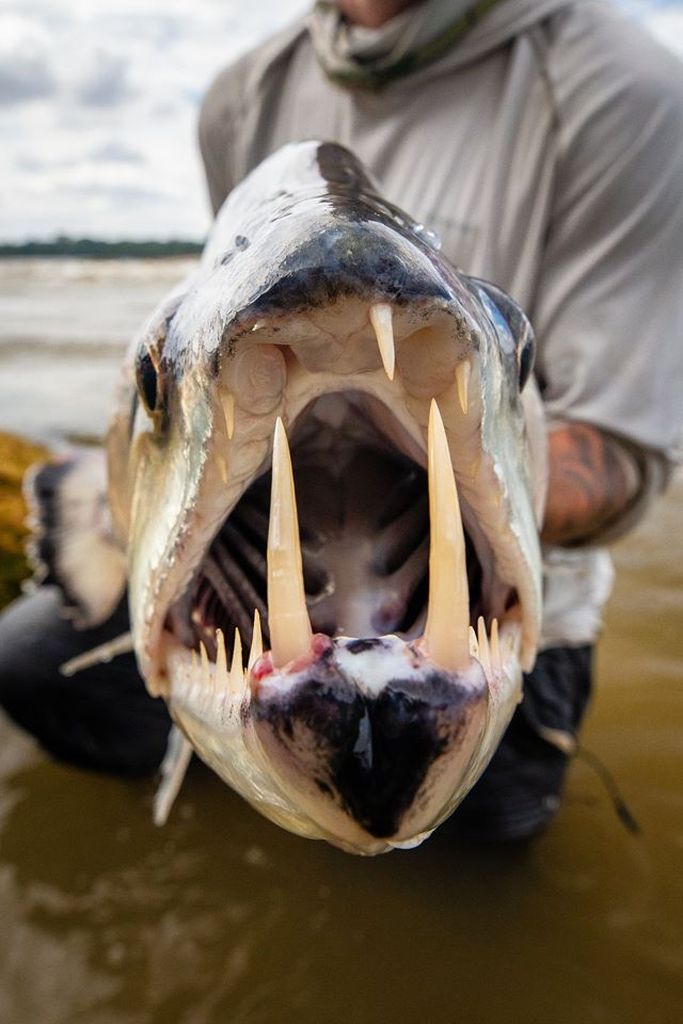
Lures that work
- Propeller lures 8–10 cm for peacock bass, payara and bicuda.
- Walk-the-dog 10–13 cm for predatory fish that hunt near the surface.
- Poppers 8–10 cm for aggressive topwater fishing.
- Jerkbaits and crankbaits 10–13 cm around structure.
- Deep-diving jerkbaits 13–20 cm for payara and deeper fishing.
- Jigs from 85 grams for payara, catfish and silver drum.
- Spinners in assorted sizes for pacu, couti and peacock bass.
Species by species
Peacock bass hold in calmer backwaters and strike surface lures with tremendous force. Start with prop baits and walk-the-dog lures.
Payara hunt in flowing water and take surface lures, wobblers and jigs. Deep-diving jerkbaits and heavy jigs are effective when the fish are holding deep.
You can find silver drum by jigging along the bottom in deep holes. They can weigh up to 6 kilos and put up hard fights.
Arowana readily take surface lures and flies.
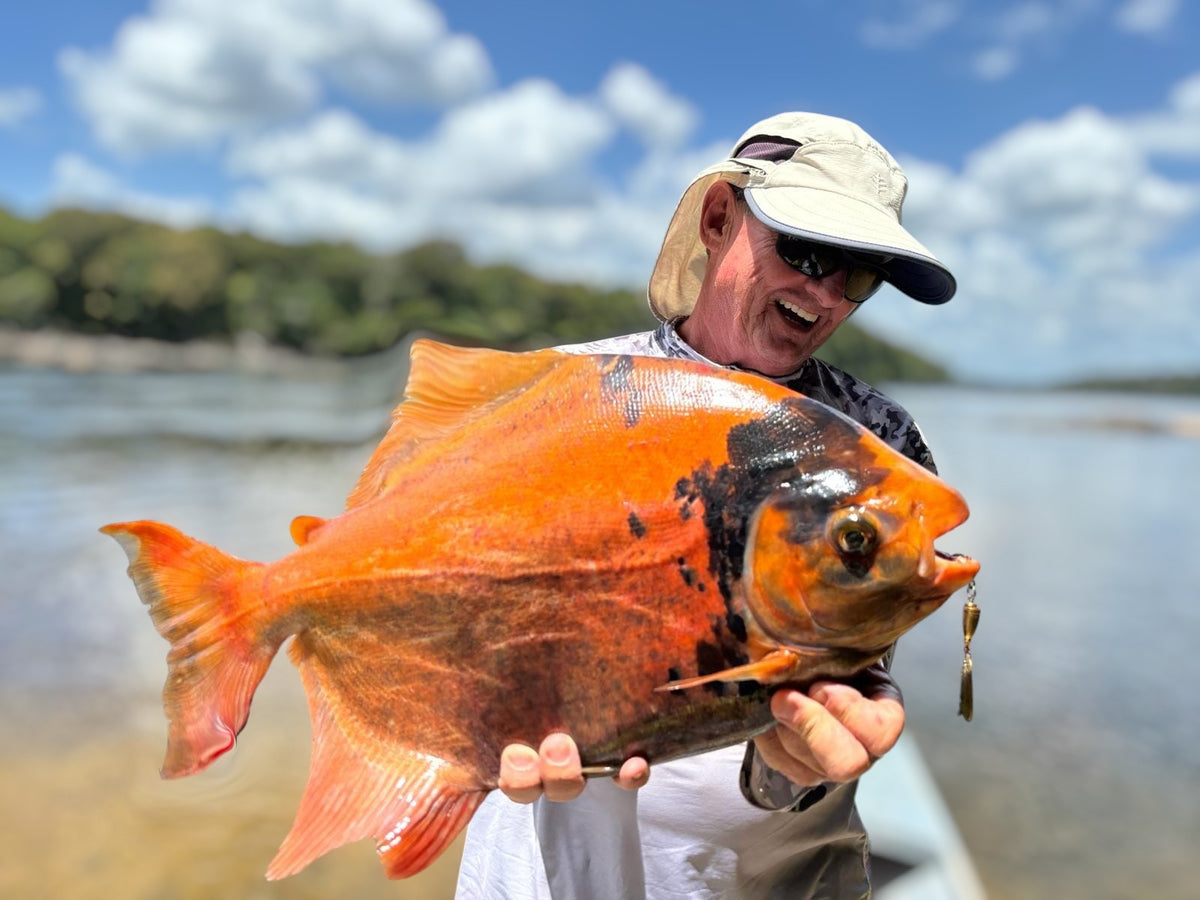
The guides will assist you on site
The methods are adapted each day according to water levels, current and the species you’re targeting, and the guides from Apoteri know where the fish are holding. We tell you about the trip itself, the lodge and the village of Apoteri in the guide to the fishing trip in Guyana.
Ready for Guyana?
When you book, you receive a detailed packing list, and we’re happy to help with questions about the equipment.
See the fishing trip to Guyana
Frequently asked questions about equipment in Guyana
Will I receive a packing list?
Yes, a detailed equipment list is sent out once you have booked.
How do you fish for arapaima?
With powerful tackle and a barbless 8/0 circle hook tied directly to the monofilament line, without a sinker or wire leader. All arapaima are released.
Is there Wi-Fi at the lodge?
Yes, via Starlink. It’s enough to stay in touch with home and send photos.
Questions about the trip?
We’re happy to help with planning and questions about the fishing. Call us at +46 313 758 200 or email us info@outsidetravels.com.